Table of Contents
A real-time strategy game lives or dies by its campaign. Multiplayer keeps an RTS alive for years, but most players first arrive for a strong single-player story. After a hands-on preview, PC Gamer online editor Fraser Brown says Warhammer 40,000: Dawn of War 4 delivers. His impressions, published on 21 October 2026, suggest the long-running series may be back on solid ground.
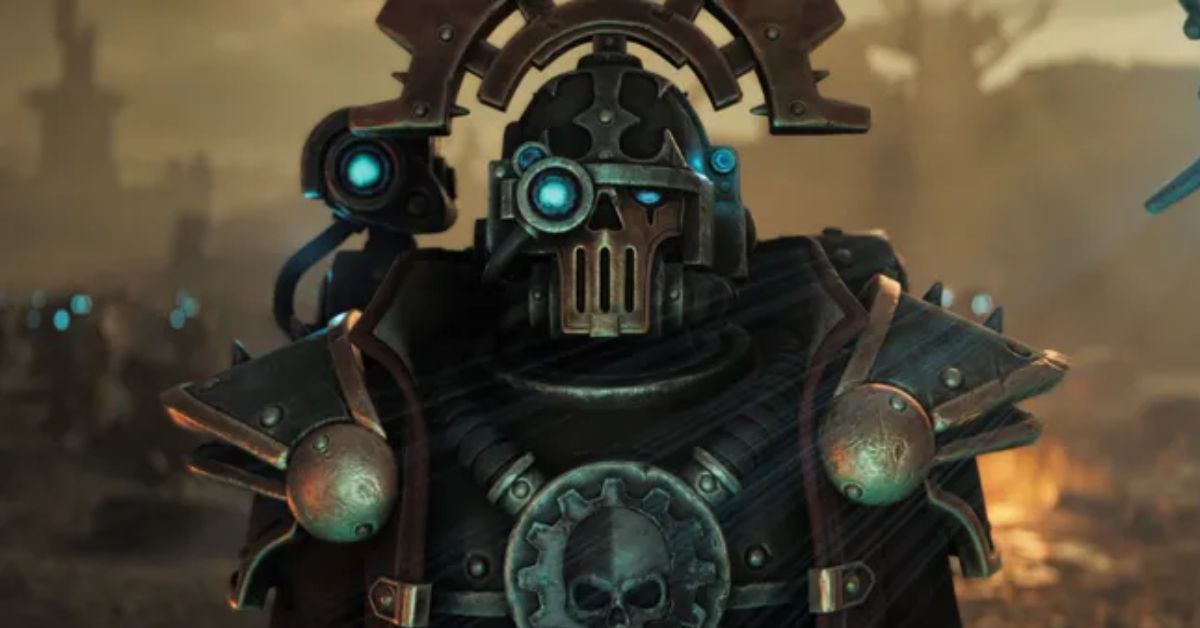
Image credit: Deep Silver
A Hopeful Start After Dawn of War 3
Brown spent a couple of weeks with two of the game’s four campaigns, the Orks and the Adeptus Mechanicus, plus a short two-mission prologue starring the Astra Militarum. He admits he went in worried that Dawn of War 3’s problems might repeat. That fear faded quickly. In his words, he’s loving what he’s played.
The game is being developed by King Art and published by Deep Silver. Brown says he was already a fan of Iron Harvest, which borrowed heavily from the original Dawn of War developer Relic, so he expected to enjoy this one. Still, he points out that a good RTS campaign is never guaranteed, even from a proven studio.
Read More: Nurse Harrow Finally Joins Deadlock: 110 Million Votes and One Player Who Voted 1,000 Times
The Ork Campaign: Loud, Fast and Chaotic
After the prologue, Brown joined the Orks, which he calls the best first pick because their campaign comes first in the timeline and the faction is the most straightforward. Their units and buildings are the cheapest in the game, so you can field a basic army within minutes. If you simply want to smash things, they’re your faction.
That doesn’t mean you can charge in blind. Scouting your enemy matters, because it tells you which units to recruit and which wargear upgrades to give them. Like the tabletop game, you can swap weapons on individual units to counter specific threats.
The story is full of boastful, backstabbing greenskins. You begin as the boss of a local band of Orks on the planet Kronos, until a rival Ork warlord arrives from space, a familiar face for series veterans, and claims the world as his own. One standout mission turns this rivalry into a race to destroy an Adeptus Mechanicus base first. Brown praises the map, which has a slight MOBA-style lane layout, open areas for big battles, plenty of chokepoints and high ground. Watching the rival Orks push forward on their own path kept the pressure on better than any interface element could.
Afterwards, you choose a side, the local boyz or the invaders. Some missions overlap, but others are unique, and the commander units differ. Brown sees this as a clever fix for the one-and-done nature of RTS campaigns, since you’d need to play twice to see everything.
Read More: Shrek 2 Remastered: The 2004 film game is returning, just 9 days before GTA 6
Tabletop Flavor Done Right
As a tabletop fan, Brown feels well looked after. Even though Dawn of War 4 is real-time rather than turn-based, it feels authentic. Stratagems and command points carry over from the tabletop game. You earn command points by fighting and capturing points, then spend them on powerful abilities. Summoning explosive squigs, dropping in a random unit, or calling a WAAAGH! to buff your army all turned battles for him more than once.
The Ork animations are exaggerated and colorful, and zooming in on a melee brawl is worth giving up some battlefield visibility. King Art has expanded the synced combat animations beyond simple kills. Brown notes it doesn’t always work perfectly, with some units flailing at nothing, but overall the clashes feel physical and tangible. He hopes the final build looks even better.
The Adeptus Mechanicus: A Scalpel After the Sledgehammer
Next came a big change of pace. This is the first time the Adeptus Mechanicus have appeared in Dawn of War, and Brown describes them as a scalpel compared with the Orks’ blunt instrument. The campaign has a similar structure, with a rivalry and a choice between two paths, but distinct missions and characters give it its own flavor. The story centers on technoarchaeology and immortal machines as the tech priests try to stop awakened Necrons on Kronos.
They are a ranged powerhouse, but they also get stealthy melee units early on that can lock down ranged enemies or flush out foes hiding behind cover.
Read More: Onimusha 3 Remaster Hopes Rekindled: Capcom Producer’s Response Stirs Fans
Cover Is Back
One of the most welcome changes is the return of cover. It was a big part of the first two games but was sidelined in Dawn of War 3, where the system was poorly placed and mostly useless. Here, maps feature barricades in sensible spots that protect ranged units, though melee units and flanking can break them. Orks can build barricades anywhere. The Adeptus Mechanicus build Emanatus Field Generators, which absorb melee damage and protect garrisoned units from ranged fire in all directions.
The Mechanicus also have the Void Shield, which stops enemies from shooting into your base, and the Noosphere Network, which links buildings, turrets and generators for efficiency boosts. The bigger the network grows, the stronger you become, but the more vulnerable it is to attacks on key relays. Add the towering Knight and a stratagem that can wipe out a whole enemy force when timed right, and the faction has plenty of fun toys.
Dawn of War 4 vs. Total War 40K
Brown also addresses the idea that Creative Assembly’s upcoming Total War: Warhammer 40,000 will overshadow this game. He doesn’t buy it. Dawn of War 4 is a classic, pure RTS with mostly linear, story-focused campaigns and base building. Total War 40K, by contrast, is more of a grand strategy game with real-time battles, open maps and sandbox campaigns, and it has no release date yet. He thinks there’s room for both, and that it’s a great time to be a 40K fan, even if it may leave his wallet empty.
Source: PC Gamer